I’m a Palaeolithic archaeologist based at the University of Reading. I specialise in early hunting weaponry, the use of wood for tools, and the archaeology of children. I used a mixed-methods approach including analysis of Pleistocene artefacts, experimental archaeology, and cross-cultural research.
I recently completed a British Academy Research Fellowship for a project titled “Reverse Engineering Pleistocene Spears: interdisciplinary perspectives on raw materials and performance”. I am also part of the research team working on the wood remains from Schöningen, and have collaborations across multiple countries.
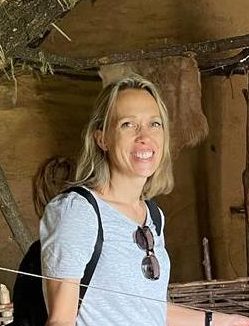
I take an active role in the Forager Children Interdisciplinary Studies Group, and co-founded the Archaeological Woodworking Network.
My doctoral research focused on the earliest weapons in the archaeological record, which are wooden spears that date as early as 400,000 years ago. These incredible artefacts represent the earliest examples of the longest-serving weapons known to have been made by humans. Weaponry provides a fascinating window into human food strategies, behavioral adaptations, and dispersals throughout the Pleistocene. My interests from there have naturally evolved into the archaeology of childhood, the importance of skill development, and how children and adolescents were drivers of cultural and evolutionary change in the deep past.
My work has been funded by the British Academy, the Leakey Foundation, the Wenner-Gren Foundation, the Arts and Humanities Research Council, The European Human Behaviour and Evolution Association, UCL Centre for Humanities Interdisciplinary Research Projects, and crowdfunding on experiment.com.

